
Case Series / Open Access
DOI:10.31488/bjg.1000147
Gastrointestinal Disorders and Refractory Hypothyroidism: Two Cases and a Mini-Review of Parenteral Levothyroxine Therapy
Letizia Meomartino*, MD, Gloria Selvatico, MD, Enrico Ragaglia1, MD, Gaia Grilli, MD, Gianluca Aimaretti, MD, Loredana Pagano, MD, PhD
Endocrinology, Diabetology and Metabolism, Department of Medical Sciences, University of Turin, 10126 Turin, Italy
*Corresponding author: Letizia Meomartino, Endocrinology, Diabetology and Metabolism, Department of Medical Sciences, University of Turin, 10126 Turin, Italy, E-mail: meomartinoletizia@gmail.com
Abstract
Background: Oral Levothyroxine (LT4) is the gold-standard treatment for hypothyroidism, but a subset of patients remains biochemically uncontrolled despite high-dose therapy. After excluding non-adherence and drug or dietary interferences, gastrointestinal disorders should be investigated. In severe or unexplained treatment-refractory hypothyroidism, parenteral LT4 may represent a valuable therapeutic option, although evidence supporting its long-term use remains limited. Case Presentations: We describe two markedly different clinical scenarios in patients with refractory hypothyroidism evaluated by an LT4 absorption test. A 63-year-old woman developed profound LT4 malabsorption and failed multiple oral strategies including high-dose liquid LT4 and LT4/LT3 combination therapy. She achieved stable biochemical control only with long-term intravenous (IV) LT4 (800 μg once weekly), without treatment-related adverse events. A 67-year-old woman with autoimmune atrophic gastritis who developed severe hypothyroidism after completion thyroidectomy despite high-dose oral LT4. Although her LT4 absorption test did not support severe malabsorption, she experienced clinical and biochemical improvement after a single IV LT4 dose, and her therapy was subsequently optimized with oral soft-gel LT4 and LT3. Mini review: Published evidence on parenteral LT4 remains limited to case reports and small case series, with IV administration being the most frequently reported approach. Intramuscular and subcutaneous routes may offer practical advantages for long-term treatment, particularly by reducing the need for repeated hospital access, although injection-site reactions and variable absorption may limit their use. Interestingly, long-term parenteral treatment may not always be required, as short-term administration has been reported to improve the subsequent response to oral LT4, possibly through reversal of intestinal mucosal oedema associated with prolonged hypothyroidism. Conclusion: Our cases highlight the importance of recognizing severe gastrointestinal malabsorption as a cause of refractory hypothyroidism and suggest that long-term intravenous levothyroxine replacement may represent a safe and effective therapeutic option when all oral strategies have failed. Early recognition of these patients may prevent prolonged uncontrolled hypothyroidism and its potentially life-threatening consequences.
Key words: refractory hypothyroidism; gastrointestinal malabsorption; oral LT4; parenteral LT4
Introduction
Levothyroxine (LT4) monotherapy is considered the standard treatment for patients with hypothyroidism [1-4]. Adequate gastrointestinal absorption is a key determinant of its therapeutic efficacy. After oral administration, LT4 tablets undergo disintegration and dissolution in the stomach before the active hormone becomes available for intestinal absorption [1,5].
These initial steps are critically dependent on normal gastric acidity, making the gastric environment crucial for optimal LT4 bioavailability [1,5].
Subsequently, approximately 60–80% of the administered dose is absorbed through the intestinal mucosa, predominantly in the jejunum and ileum, within the first three hours after ingestion [5-7].
An important clinical challenge arises when patients present with refractory hypothyroidism, defined as persistent biochemical evidence of hypothyroidism (serum TSH level above the upper target level) despite treatment with high-dose LT4 (≥1.9 μg/kg/day) [1,7,8].
Poor adherence to therapy remains the most frequent cause of apparent treatment failure, often referred to as pseudo-malabsorption [1,2,9,10].
Therefore, the first step in the diagnostic work-up should be the exclusion of non-adherence and inappropriate LT4 administration. Incorrect timing of drug intake, including ingestion with food, insufficient fasting before breakfast, or concomitant consumption of high-fibre meals, espresso coffee, or grapefruit juice, may significantly reduce LT4 absorption [2,5,7].
In addition, several medications and supplements are also known to interfere with LT4 absorption, including acid-reducing agents (proton pump inhibitors [PPIs], H2 antagonists), calcium salts (carbonate, citrate, and acetate), multivitamins, and iron supplements [11].
Once poor adherence and interfering factors have been excluded, clinicians should investigate underlying gastrointestinal disorders that may impair LT4 absorption. Gastric diseases such as Helicobacter pylori (HP) infection and autoimmune atrophic gastritis may impair tablet dissolution by increasing gastric pH, whereas intestinal disorders such as short bowel syndrome, lactose intolerance, coeliac disease, inflammatory bowel disease and infiltrative enteropathy, may reduce intestinal hormone absorption [2,6,12].
Differentiating true gastrointestinal malabsorption from pseudo-malabsorption may be challenging in clinical practice. In this setting, the supervised LT4 absorption test represents the most useful diagnostic tool for distinguishing these two conditions [2].
When severe gastrointestinal malabsorption is confirmed, conventional oral replacement therapy may become ineffective despite the use of high LT4 doses or alternative oral formulations. In these patients, parenteral LT4 administration may represent the only effective therapeutic option, although evidence supporting its long-term use remains limited and is largely restricted to case reports and small case series. Alternative strategies, including liquid LT4 formulations, soft-gel capsules, or combined LT4/liothyronine (LT3) therapy, may also be considered in selected patients [3].
Herein, we describe two patients with severe refractory hypothyroidism secondary to gastrointestinal disorders requiring parenteral LT4 replacement. We also provide an updated review of the literature focusing on the mechanisms of LT4 malabsorption, the diagnostic approach, and the currently available evidence regarding parenteral thyroid hormone replacement.
Case Report 1
Long-term intravenous levothyroxine replacement in severe short bowel syndrome
A 63-year-old woman underwent total thyroidectomy for multinodular goiter in 2004, resulting in postoperative hypothyroidism. She achieved stable biochemical euthyroidism with oral LT4 replacement and remained well controlled for the following 13 years.
In 2019, she underwent extensive small bowel resection due to acute mesenteric ischaemia secondary, resulting in short bowel syndrome.
During the following months, she progressively developed refractory hypothyroidism despite excellent self-reported adherence to treatment and repeated escalation of oral LT4 doses up to 250 μg/day in a patient weighing only 48 kg. Neither liquid LT4 formulations nor combination therapy with LT4 and LT3 (up to 20 μg twice daily) resulted in satisfactory biochemical control (Table 1).
Table 1. Changes over time in thyroid function and replacement therapy. TSH= thyroid-stimulating hormone. fT4= free thyroxine. fT3: free triiodothyronine; LT4: levothyroxine; LT3: liothyronine
| TSH mIU/L | fT4 ng/L | fT3 ng/L | LT4 dose and formulation | LT3 dose | |
|---|---|---|---|---|---|
| March 2019 | 100 | 1.8 | - | Liquid formulation 200 mcg |
- |
| February 2020 | 150 | <4 | - | Liquid formulation 200 mcg |
5 mcg bid |
| May 2020 | 100 | 5.6 | 1 | Liquid formulation 250 mcg |
5 mcg bid |
| June 2021 | 313 | 5 | 1.29 | Liquid formulation 250 mcg |
10 mcg bid |
| December 2021 | 130 | 4.2 | 1 | Liquid formulation 250 mcg |
20 mcg bid |
The patient was first referred to our department in 2020 for evaluation of persistent biochemical hypothyroidism. Despite markedly abnormal thyroid function tests, she reported only mild symptoms as facial myxoedema and asthenia. Potential causes of impaired LT4 absorption were systematically investigated. Concomitant medications known to interfere with LT4 absorption were excluded, Helicobacter pylori infection was ruled out, and anti-parietal cell antibodies were negative.
Laboratory evaluation showed a TSH level >100 mIU/L (reference range [RR]: 0.350-4.940), free T4 (fT4) 6 ng/L (RR: 7-14.8), and free T3 (fT3) <1.5 ng/L (RR: 1.6-3.9).
Based on the patient's clinical history, gastrointestinal malabsorption was suspected and subsequently confirmed by a supervised LT4 absorption test. The test was performed using 200 μg of liquid LT4 (4.2 μg/kg), with TSH, fT4, and fT3 measured every hour for 4 hours. Throughout the test, fT4 levels remained below the lower limit of the assay (<7 ng/L).
Because all available oral therapeutic strategies had failed, parenteral LT4 replacement was initiated. Intramuscular (IM) LT4 (L-thyroxine SERB, 0.2 mg/mL) was started at a dose of 200 μg three times weekly. However, only a modest biochemical response was observed, with minimal increases in serum fT4 and fT3 concentrations (Figure 1).
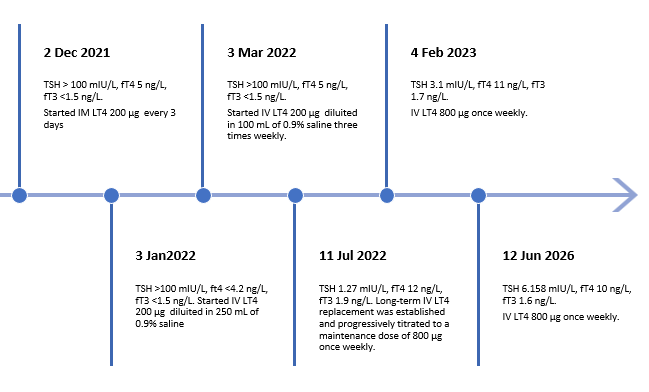
Figure 1:Timeline of LT4 dosage adjustment and changes in thyroid function. TSH: thyroid-stimulating hormone; fT4: free thyroxine; fT3: free triiodothyronine; LT4: levothyroxine; IM: intramuscular; IV: intravenous
Given the limited efficacy of IM therapy, the discomfort associated with repeated injections, and the availability of a tunneled central venous catheter already in place for long-term parenteral nutrition, intravenous (IV) LT4 replacement was considered the most appropriate therapeutic strategy.
Intravenous LT4 (L-thyroxine SERB, 0.2 mg/mL (13)) was initially administered cautiously at a dose of 200 μg diluted in 100 mL of 0.9% saline and infused over 30 minutes, three times weekly.
Treatment was subsequently individualized according to serial measurements of TSH, fT4, and fT3, as well as the patient’s clinical status (Figure 1). Following biochemical stabilization, the infusion schedule was progressively reduced to twice weekly and finally to a maintenance regimen consisting of four ampoules (800 μg) of IV LT4 diluted in 100 mL of 0.9% saline and administered once weekly.
The patient is currently followed in our outpatient endocrine service and receives scheduled weekly IV LT4 infusions. During follow-up, she has remained clinically well, with overall satisfactory biochemical control despite occasional TSH fluctuations related to delayed or missed hospital visits (Figure 2). The patient has remained clinically asymptomatic throughout follow-up, with overall. Importantly, no treatment-related adverse events or complications have been observed during long-term follow-up
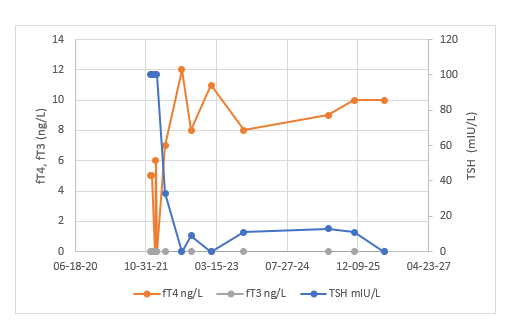
Figure 2:Trend of TSH, fT4, and fT3 levels over time. TSH: thyroid-stimulating hormone; fT4: free thyroxine; fT3: free triiodothyronine
Case Report 2
Refractory hypothyroidism in autoimmune atrophic gastritis with partial response to optimized oral therapy
A 67-year-old woman with Graves' disease underwent subtotal thyroidectomy in 1993. In August 2025, she underwent completion thyroidectomy for recurrent multinodular compressive goiter. Histopathological examination incidentally revealed a papillary microtumor (PMiT), for which active surveillance was recommended.
Notably, even before the second thyroid surgery, the patient required an unusually high weight-adjusted dose of soft-gel LT4 (450 μg/day; body weight 60 kg) to maintain biochemical euthyroidism (TSH 3.5 mIU/L; fT4 12.2 ng/L), suggesting pre-existing impairment of LT4 absorption. Her medical history was remarkable for autoimmune atrophic gastritis. She was also receiving iron supplementation and PPIs, however, these medications were consistently taken several hours after LT4 administration, making significant pharmacological interference unlikely. Upper gastrointestinal endoscopy confirmed atrophic gastritis, although the patient was already receiving a soft-gel LT4 formulation, which is considered less dependent on gastric acidity than conventional tablets.
Following completion thyroidectomy, she developed progressive biochemical and clinical hypothyroidism despite progressively increasing doses of LT4, the use of different oral LT4 formulations, and combination LT4 /LT3 therapy (Table 2).
Table 2. Changes over time in thyroid function and replacement therapy. TSH: thyroid-stimulating hormone; fT4: free thyroxine; fT3: free triiodothyronine; LT4: levothyroxine; LT3: liothyronine
| TSH mIU/L | fT4 ng/L | fT3 ng/L | LT4 dose and formulation | LT3 dose | |
|---|---|---|---|---|---|
| 27/8/25 | 64.4 | 2.6 | - | Softgel 150 mcg | - |
| 12/2025 | 147 | 0.9 | - | Softgel 225 mcg | - |
| 26/2/26 | 148 | <4.2 | <1.5 | Softgel 175 mcg | 5 mcg bid |
During repeated outpatient evaluations, she consistently reported adherence to treatment and denied taking supplements or medications that could interfere with LT4 absorption or thyroid function testing.
Six months after surgery, because of persistent severe hypothyroidism, she was admitted for further investigation. On admission, the patient complained of marked asthenia, psychomotor slowing, facial myxoedema, and exertional dyspnoea, all consistent with overt hypothyroidism. Laboratory tests revealed TSH concentrations above 100 mIU/L, fT4 below 5 ng/L, and fT3 below 1.5 ng/L.
The diagnostic work-up confirmed the presence of autoimmune atrophic gastritis, with positive anti-parietal cell antibodies and negative Helicobacter pylori stool antigen testing.
A supervised LT4 absorption test, conducted using the same protocol as described above, was subsequently performed using a single oral dose of 200 μg of liquid LT4 (3.33 μg/kg). Free T4 levels increased from below the assay detection limit to measurable concentrations, although values remained at the lower limit of the reference range. Overall, the test did not support severe gastrointestinal malabsorption.
Because of persistent symptomatic hypothyroidism, IV LT4 (200 μg diluted in 100 mL of 0.9% saline and infused over 30 minutes) was administered. This resulted in a clear biochemical improvement, with a reduction in TSH concentrations and an increase in circulating thyroid hormone levels, accompanied by progressive clinical recovery.
At discharge, oral replacement therapy was optimized using soft-gel LT4 (200 μg/day) combined with LT3 (5 μg twice daily). Partial biochemical improvement was observed during follow-up (TSH 17.4 mIU/L; fT4 10.6 ng/L; fT3 2.36 ng/L), although long-term monitoring will be required to determine the durability of this response.
Mini review of Literature
According to the American Thyroid Association (ATA) and European Thyroid Association (ETA) guidelines, oral levothyroxine (LT4) represents the standard treatment for primary hypothyroidism [4,14].
In most patients, euthyroidism can be restored with a replacement dose of approximately 1.5–1.7 μg/kg/day (15,16).
Nevertheless, a proportion of patients remain biochemically uncontrolled despite apparently adequate treatment, with reported rates ranging from 20% to 50% depending on the study population and the definition adopted [15].
Refractory primary hypothyroidism is generally defined as persistent biochemical hypothyroidism accompanied or not by severe clinical manifestations despite at least 6 weeks of treatment with LT4 doses exceeding 1.9 μg/kg/day after the last dose adjustment [1,14].
The most common explanation for apparent treatment failure is poor adherence to therapy rather than true gastrointestinal malabsorption [1,2,9,10].
The evaluation of patients with refractory hypothyroidism requires a systematic approach, including careful assessment of treatment adherence, review of concomitant medications and dietary habits, and investigation of gastrointestinal disorders potentially affecting LT4 absorption [17].
The first diagnostic step is to exclude poor adherence or incorrect LT4 administration. Patients may omit doses, take LT4 inconsistently, or fail to comply with fasting recommendations, resulting in a condition commonly referred to as levothyroxine pseudomalabsorption [15]. For optimal absorption, LT4 should be taken on an empty stomach, ideally 30-60 minutes before breakfast or at least 3–4 hours after the last meal of the day. Food, particularly high-fibre meals, as well as espresso coffee and grapefruit juice, may significantly reduce LT4 bioavailability when consumed too close to drug administration [1,14].
Several medications may also interfere with LT4 absorption through different mechanisms. PPIs, sucralfate, and aluminium-containing antacids increase gastric pH and impair tablet dissolution, whereas iron supplements, calcium salts, phosphate binders, and bile acid sequestrants reduce LT4 bioavailability by forming insoluble complexes within the intestinal lumen [5,9,15,16].
Although correction of the underlying condition frequently restores adequate LT4 absorption, approximately 10-20% of patients have no identifiable cause of refractory hypothyroidism [1]. Management of these patients remains challenging because evidence-based therapeutic recommendations are limited.
The first therapeutic strategy usually consists of optimizing oral replacement therapy. Liquid and soft-gel LT4 formulations are less dependent on gastric acidity and have demonstrated improved bioavailability and biochemical control in several gastrointestinal disorders, particularly those affecting gastric dissolution [7,15,16,18].
However, this approach requires frequent biochemical monitoring and dose adjustment, resulting in increased healthcare costs and reduced patient satisfaction [5,16].
In addition, these formulations may still be ineffective in patients with severe intestinal disease, where the absorptive surface is markedly reduced.
Several gastrointestinal diseases may impair either the gastric phase of tablet dissolution or the intestinal phase of hormone absorption, thereby increasing LT4 requirements despite apparently appropriate treatment [15,19] (Table 3). Among gastric disorders, autoimmune atrophic gastritis and HP infection are the most extensively investigated conditions. Both disorders are associated with reduced gastric acid secretion, resulting in impaired tablet dissolution and higher LT4 dose requirements [2,6,19-21]. Some authors have also suggested that chronic gastric inflammation itself, independently of gastric pH, may contribute to reduced LT4 absorption [22]. In patients with H. pylori infection, eradication therapy has been associated with improved LT4 absorption and, in some cases, a reduction in LT4 dose requirements, further supporting the role of gastric pathology in refractory hypothyroidism [19].
Table 3. Gastrointestinal conditions associated with LT4 malabsorption, underlying mechanisms contributing to impaired absorption, and management strategies. LT4: levothyroxine; HP: Helicobacter pylori; PPIs: proton pump inhibitors
| Condition | Mechanism of LT4 malabsorption | Management strategy |
|---|---|---|
| Atrophic gastritis |
|
Use of LT4 formulations less dependent on gastric pH, including liquid and soft-gel preparations. |
| HP infection |
|
Use of LT4 formulations less dependent on gastric pH, including liquid and soft-gel preparations. |
| Celiac disease |
|
Gluten-free diet |
| Lactose intolerance |
|
Lactose-free diet |
| Bariatric surgery |
|
Correct LT4 administration timing (separation from PPIs and supplements) and switch to less pH-dependent formulations. |
| Short bowel syndrome |
|
Correct LT4 administration timing (separation from PPIs and supplements) and switch to less pH-dependent formulations. |
| Intestinal dysmotility |
|
Treat the underlying motility disorder; consider liquid or soft-gel LT4 formulations. |
Regarding intestinal disorders, coeliac disease (CD) represents one of the best-recognized causes of refractory hypothyroidism because villous atrophy reduces the absorptive surface of the proximal small intestine, where LT4 is primarily absorbed [2,5,23]. Additional mechanisms, including increased intestinal permeability and altered intestinal transit, may further reduce drug bioavailability [5]. Importantly, a gluten-free diet often improves LT4 absorption and reduces replacement requirements [19]. Lactose intolerance (LI) has also been associated with increased LT4 requirements [19]. Besides the presence of lactose in some tablet formulations, accelerated intestinal transit and intestinal dysbiosis may contribute to impaired hormone absorption [2,5,23]. In most patients, dietary lactose restriction is sufficient to restore adequate biochemical control [2,19].
Bariatric surgery may affect LT4 bioavailability through several mechanisms, including anatomical changes, reduced gastric acidity, decreased absorptive surface, and the frequent use of PPIs or mineral supplements [2,3,5,7,24,25]. Although published data are heterogeneous, patients undergoing Roux-en-Y gastric bypass generally require higher weight-adjusted LT4 doses than before surgery [26-28]. Switching to liquid or soft-gel formulations may improve absorption in many cases [5,19,29,30]. Among intestinal disorders, short bowel syndrome is likely to represent the most severe form of LT4 malabsorption. Extensive intestinal resection markedly reduces the available absorptive surface and is frequently associated with accelerated intestinal transit and intestinal dysbiosis, further limiting hormone bioavailability [29,31-34].
When gastrointestinal malabsorption is suspected, although not standardized, the supervised LT4 absorption test represents the most useful diagnostic tool for distinguishing true gastrointestinal malabsorption from pseudomalabsorption [1,7,11]. The test is usually performed by administering a single high oral dose of LT4 (600-1000 μg), followed by serial measurements of serum fT4 and, less commonly, TSH and fT3 [1,8,11,18]. A significant increase in fT4 concentrations generally indicates preserved intestinal absorption and strongly suggests pseudomalabsorption rather than true malabsorption [1,8,18]. Although different cut-offs have been proposed, an increase in serum fT4 of >50-60% is generally considered suggestive of adequate absorption and helps exclude significant gastrointestinal LT4 malabsorption [8,18]. However, the normalization of fT4 levels itself may also support preserved LT4 absorption (18). More recently, simplified protocols lasting only two hours have also demonstrated good diagnostic accuracy, potentially improving the feasibility of this procedure in routine clinical practice [35,36]. Our two cases suggest that the diagnostic performance of the LT4 absorption test does not necessarily depend on the administration of high weight-adjusted LT4 doses. Despite the use of relatively modest LT4 doses, the test successfully differentiated pseudomalabsorption from true malabsorption. In particular, the changes in fT4 concentrations identified impaired LT4 absorption in the presence of an underlying gastrointestinal disorder.
These observations highlight the importance of considering gastrointestinal disorders whenever unexpectedly high LT4 doses are required. Early recognition of the underlying condition may avoid unnecessary dose escalation and facilitate a more appropriate therapeutic strategy. In particular, in patients with extensive intestinal disease, optimization of oral LT4 formulations may be insufficient, making parenteral replacement the only effective therapeutic option.
Our first patient with short bowel syndrome clearly illustrates this scenario. Despite progressive dose escalation, liquid LT4, soft-gel capsules, and combined LT4/LT3 therapy, overt hypothyroidism persisted. In this setting, the failure of multiple oral strategies and the documented impairment of LT4 absorption supported the need for parenteral replacement.
In contrast, our second patient, despite the absence of demonstrable malabsorption on the LT4 absorption test, showed only partial improvement with optimized oral treatment. Nevertheless, a single intravenous LT4 dose produced a biochemical and clinical improvement, followed by a partial response to optimized oral therapy. This finding suggests that mechanisms other than impaired intestinal uptake may contribute to refractory hypothyroidism. It has been hypothesized that prolonged overt hypothyroidism itself may impair LT4 absorption through intestinal mucosal oedema, with potential recovery after restoration of euthyroidism (40,45,50), as partially occurred in our second patient. Although this hypothesis remains controversial, as no significant intestinal structural abnormalities were observed [37,38], it provides a potential explanation for the improved oral response observed in some patients after short-term parenteral treatment [37-41].
In these highly selected patients in whom pseudomalabsorption has been excluded and conventional oral strategies have failed, parenteral LT4 replacement should be considered.
Although IV LT4 is currently approved mainly for myxoedema coma [14,42], it is the most frequently reported parenteral route, suggesting that it may represent a feasible therapeutic alternative, particularly in patients with severe gastrointestinal disease [7,18,37,38,40,43-47] (Table 4). The major limitation is the need for repeated venous access and regular hospital visits [41]. However, successful long-term outpatient treatment has been reported [37,45]. Our experience is consistent with these observations and further supports the feasibility of long-term IV LT4 replacement, with stable clinical and biochemical control and no treatment-related adverse events during prolonged follow-up.
Table 4. Summary of published studies on parenteral levothyroxine (LT4) administration, including study design, patient characteristics, hypothyroidism aetiology, suspected underlying cause of malabsorption (when reported), and parenteral LT4 treatment regimen. LT4= levothyroxine. IV= intravenous. IM= intramuscular. SC= subcutaneous. APS= Autoimmune Polyglandular Syndrome.
| Study | Patient | Aetiology of hypothyroidism | Underlying condition | Parenteral LT4 regimen |
|---|---|---|---|---|
| Tonjes A., et al. 2006 (38) | Case report; 47-year-old woman | Total thyroidectomy with radioactive iodine postoperatively for papillary thyroid carcinoma | Gastrointestinal malabsorption | IV LT4 250 μg twice weekly |
| Gruneisen E., et al. 2025 (7) | Case report; 47-year-old woman | Total thyroidectomy with radioactive iodine postoperatively for papillary thyroid cancer | Malabsorption after sleeve gastrectomy | IV LT4 1.6 μg/kg × 0.75 |
| Naman A., et al. 2022 (43) | Case report; 53-year-old man | Autoimmune hypothyroidism | Malabsorption of unknown cause | IV LT4 200 μg weekly IV added to the oral therapy. Subsequently switched to SC LT4, titrated up to 600 μg/week (three injections). |
| Avichal D., et al. 2020 (44) | Case report; 71-year-old woman | Autoimmune hypothyroidism | Refusal of oral LT4 due to psychiatric illness | IV LT4 titrated up to 200 µg three times a week |
| Nagaoka T., et al. 2002 (37) | Case report; 40-year-old woman | Right hemithyroidectomy for papillary thyroid tumor | Malabsorption of unknown cause | IV LT4 titrated up to 150 μg/daily |
| Lips DJ., et al. 2004 (18) | Case report; 33-year-old woman | Hypothyroidism post-radioactive iodine therapy | Poor adherence | IV LT4 200 μg |
| Nakano Y., et al. 2019 (45) | Case report; 41-year-old woman | Total thyroidectomy for Graves’ disease | Poor adherence | IV LT4 300 μg once weekly in the outpatient setting for over one year |
| Yoshida T., et al. 2020 (46) | Case report; 81-year-old woman | Autoimmune hypothyroidism | Suspected overexpression or hyperfunctioning of drug efflux transporters in the brush border of the gastrointestinal epithelium | IV LT4 300 μg once weekly |
| Jauk B., et al. 2000 (40) | Case report; 50-year-old woman | Subtotal thyroidectomy for papillary thyroid cancer | Malabsorption of unknown cause | IV LT4 250 μg every other day. SC LT4 was also attempted. |
| Payer J., et al. 2000 (47) | Case report; 42-year-old woman | Autoimmune hypothyroidism | Poor adherence | IV LT4 500 μg every 3–4 days for 4 weeks |
| Taylor PN., et al. 2015 (49) | Case report; 82-year-old woman | History of hypothyroidism (unspecified etiology) | Poor adherence | IM LT4 200 μg weekly titrated up to 500 mcg/week |
| Garayalde Gamboa M de los A., et al. 2019 (50) | Case report; 55-year-old man | Total thyroidectomy with radioactive iodine postoperatively for follicular thyroid cancer | Partial gastrectomy for gastric adenocarcinoma | IM LT4 200 μg/week titrated up to 1200 μg/week |
| Hoang TD., et al. 2025 (3) | Case report; 55-year-old woman | Autoimmune hypothyroidism | Roux-en-Y gastric bypass | IM LT4 100 μg daily |
| Peynirci H., et al. 2018 (41) | Case report; 32-year-old woman | Total thyroidectomy with radioactive iodine postoperatively for papillary thyroid cancer | Malabsorption of unknown cause | IM LT4 200 μg/day titrated up to 1200 μg/week. |
| Anderson L., et al. 2009 (17) | Case report; 18-year-old girl | Autoimmune hypothyroidism in APS 2 | Malabsorption of unknown cause | IM LT4 500 μg/week titrated up to 1000 μg/week. |
| Alba P., et al. 2016 (48) | Case series; 6-, 12-, and 16-year-old girls | Hypothyroidism after thyroid ablation and autoimmune hypothyroidism | Malabsorption of unknown cause | IM LT4 200–500 μg/week |
| Kempe J., et al. 2015 (39) | Case series; 35- and 42-year-old women | Total thyroidectomy for multinodular goiter and primary hypothyroidism (unspecified aetiology) | Malabsorption of unknown cause (Crohn’s disease present in one patient but not considered causative) | IM LT4 200 μg two–three times weekly |
| Mikhail N., 2020 (54) | Case report | Thyroidectomy for thyroid cancer invading the trachea | Tracheostomy, gastrostomy tube feeding | IM LT4 200 μg daily |
| Chaudhury N., et al. 2025 (51) | Case report; 43-year-old woman | Autoimmune hypothyroidism in APS | Malabsorption of unknown cause | IM LT4 700 μg weekly for 18 years, followed by SC LT4 1200 μg every 12 days |
| Groener JB., et al. 2013 (52) | Case report; 42-year-old woman | Subtotal thyroidectomy for benign multinodular goiter | Malabsorption of unclear cause in patient with only antrum gastritis | SC LT4 500 µg weekly |
| Nobre EL., et al. 2004 (53) | Case report; 22-year-old man | Total thyroidectomy for benign multinodular goiter | Malabsorption of unknown cause | IM LT4 500 μg weekly followed by attempted SC LT4 500 μg weekly |
| Law LSC., et al. 2026 (55) | Case report; 51-year-old woman | Total thyroidectomy for papillary thyroid carcinoma | Unclear cause | SC LT4 100 μg three times a week |
| Topf A., et al. 2021 (10) | Case report; 28-year-old woman | Autoimmune hypothyroidism | Autoimmune gastritis | SC LT4 500 μg/week |
| Ljunggren JG., et al. 1975 (56) | Case report; 50- and 72-year-old women | Subtotal thyroidectomy for benign multinodular goiter and autoimmune hypothyroidism | Not specified | SC LT4 200–300 μg daily |
Intramuscular and, less frequently, subcutaneous LT4 have also been successfully used in selected patients [3,10,17,39–41,43,48–53] (Table 4). These routes may offer practical advantages for long-term treatment, particularly by reducing dependence on venous access and allowing self-administration [3,10,52]. However, injection-site pain, local reactions, and variability in absorption may limit their use [41,51,53].
Notably, the available evidence remains limited and largely based on individual clinical experiences. Despite the potential advantages, the SC route is not among the approved routes of LT4 administration, which may further limit its clinical use [13].
Overall, the limited available evidence suggests that the choice of parenteral LT4 route should be individualized according to the underlying gastrointestinal disorder, the need for long-term vascular access, patient preference, and local expertise.
Importantly, parenteral LT4 should not be considered a routine alternative to oral treatment, but rather a targeted strategy for highly selected patients in whom reversible causes and pseudo malabsorption have been reasonably excluded and optimized oral therapy remains ineffective.
Our two cases expand the current literature by illustrating two distinct clinical scenarios of refractory hypothyroidism, emphasizing its complexity and suggesting that mechanisms beyond overt intestinal malabsorption may contribute to inadequate biochemical control. Refractory hypothyroidism should therefore not be automatically attributed to poor adherence. Once pseudo malabsorption has been excluded by LT4 absorption test, clinicians should actively investigate gastrointestinal diseases and consider parenteral LT4 replacement in carefully selected patients when conventional oral therapy fails to achieve adequate biochemical control.
Conclusion
Refractory hypothyroidism should prompt a systematic evaluation of factors affecting levothyroxine absorption, with particular attention to underlying gastrointestinal disorders. While optimization of oral LT4 administration and the use of alternative formulations successfully restore euthyroidism in most patients, these strategies may be insufficient in the presence of severe intestinal disease.
Our cases, albeit rare and highly selected, demonstrate that long-term IV LT4 replacement can represent a safe, feasible, and effective therapeutic option in carefully selected patients with severe gastrointestinal malabsorption when all available oral therapies have failed. These findings also emphasize the importance of a multidisciplinary approach involving endocrinologists and gastroenterologists to identify the underlying cause of treatment failure and to individualize therapeutic management.
Although current evidence is limited to case reports and small case series, our experience adds further support to the use of parenteral LT4 in selected patients with refractory hypothyroidism. Larger prospective studies are needed to better define patient selection, optimal dosing regimens, long-term safety, and the role of parenteral LT4 within future management algorithms.
References
1. Centanni M, Benvenga S, Sachmechi I. Diagnosis and management of treatment-refractory hypothyroidism: an expert consensus report. J Endocrinol Invest. 2017;40(12):1289-1301. doi:10.1007/s40618-017-0706-y
2. Mana DL, Rizzo LFL. Challenges in the treatment of hypothyroidism: malabsorption and pseudo-malabsorption of levothyroxine. Medicina (Mex). 2025;85(5):1064-1075. doi:10.3390/medicina85051064.
3. Hoang TD, Le TD, Truong PN, Hoang LMT, Shakir MKM. Daily intramuscular levothyroxine in refractory hypothyroidism and malabsorption. AACE Endocrinol Diabetes. 2025;12(4):209-213. doi:10.1016/j.aed.2025.08.003.
4. Centanni M, Duntas L, Feldt-Rasmussen U, Koehrle J, Peeters RP, Razvi S, et al. ETA guidelines for the use of levothyroxine sodium preparations in monotherapy to optimize the treatment of hypothyroidism. Eur Thyroid J. 2025;14(4):e250123. doi:10.1530/ETJ-25-0123.
5. Virili C, Antonelli A, Santaguida MG, Benvenga S, Centanni M. Gastrointestinal malabsorption of thyroxine. Endocr Rev. 2019;40(1):118-136. doi:10.1210/er.2018-00168.
6. Centanni M, Gargano L, Canettieri G, Viceconti N, Franchi A, D'Armiento M, et al. Thyroxine in goiter, Helicobacter pylori infection, and chronic gastritis. N Engl J Med. 2006;354(17):1787-1795. doi:10.1056/NEJMoa043903.
7. Gruneisen E, Yang JW, Pasqua MR. Levothyroxine malabsorption following sleeve gastrectomy. Endocrinol Diabetes Metab Case Rep. 2025;2025(1):e240115. doi:10.1530/EDM-24-0115.
8. Walker JN, Shillo P, Ibbotson V, Vincent A, Karavitaki N, Weetman AP, et al. A thyroxine absorption test followed by weekly thyroxine administration: a method to assess non-adherence to treatment. Eur J Endocrinol. 2013;168(6):913-917. doi:10.1530/EJE-12-1035.
9. Cherchir F, Oueslati I, Mouelhi Y, Talbi E, Feki M, Yazidi M, et al. Levothyroxine liquid oral substitution as an alternative treatment for refractory hypothyroidism due to gastrointestinal malabsorption: a case report. SAGE Open Med Case Rep. 2023;11:2050313X231209229. doi:10.1177/2050313X231209229.
10. Topf A, Pleininger T, Motloch LJ, Mirna M, Kopp K, Lichtenauer M, et al. Subcutaneous administration of levothyroxine: a novel approach to refractory hypothyroidism: a review and a case report. Arch Endocrinol Metab. 2021. doi:10.20945/2359-3997000000349.
11. Ritter MJ, Gupta S, Hennessey JV. Alternative routes of levothyroxine administration for hypothyroidism. Curr Opin Endocrinol Diabetes Obes. 2020;27(5):318-322. doi:10.1097/MED.0000000000000558.
12. Lai YY, Thambiah SC, Mohamed Mokhtar N, Samsudin IN. Refractory hypothyroidism. Malays J Pathol. 2024;46(1):109-113.
13. Levothyroxine SERB 200 mcg/mL solution for injection/infusion: summary of product characteristics (SmPC).
14. Jonklaas J, Bianco AC, Bauer AJ, Burman KD, Cappola AR, Celi FS, et al. Guidelines for the treatment of hypothyroidism: prepared by the American Thyroid Association task force on thyroid hormone replacement. Thyroid. 2014;24(12):1670-1751. doi:10.1089/thy.2014.0028.
15. Fallahi P, Ferrari SM, Elia G, Ragusa F, Paparo SR, Antonelli A. L-T4 therapy in enteric malabsorptive disorders. Front Endocrinol (Lausanne). 2021;12:626371. doi:10.3389/fendo.2021.626371.
16. Shimba R, Harai N, Yamazaki M, Hosokawa T, Tsuchiya K. Pseudo-malabsorption in high dose levothyroxine-resistant hypothyroidism. JCEM Case Rep. 2025;3(6):luaf085. doi:10.1210/jcemcr/luaf085.
17. Anderson L, Joseph F, Goenka N, Patel V. Isolated thyroxine malabsorption treated with intramuscular thyroxine injections. Am J Med Sci. 2009;337(2):150-152. doi:10.1097/MAJ.0b013e31817ee556.
18. Lips DJ, van Reisen MT, Voigt V, Venekamp W. Diagnosis and treatment of levothyroxine pseudomalabsorption. Neth J Med. 2004;62(4):114-118.
19. Skelin M, Lucijanić T, Amidžić Klarić D, Rešić A, Bakula M, Liberati-Čizmek AM, et al. Factors affecting gastrointestinal absorption of levothyroxine: a review. Clin Ther. 2017;39(2):378-403. doi:10.1016/j.clinthera.2017.01.005.
20. Virili C, Brusca N, Capriello S, Centanni M. Levothyroxine therapy in gastric malabsorptive disorders. Front Endocrinol (Lausanne). 2020;11:621616. doi:10.3389/fendo.2020.621616.
21. Lahner E, Virili C, Santaguida MG, Annibale B, Centanni M. Helicobacter pylori infection and drugs malabsorption. World J Gastroenterol. 2014;20(30):10331-10337. doi:10.3748/wjg.v20.i30.10331.
22. Dietrich JW, Gieselbrecht K, Holl RW, Boehm BO. Absorption kinetics of levothyroxine is not altered by proton-pump inhibitor therapy. Horm Metab Res. 2006;38(1):57-59. doi:10.1055/s-2006-924980.
23. Castellana M, Castellana C, Giovanella L, Trimboli P. Prevalence of gastrointestinal disorders having an impact on tablet levothyroxine absorption: should this formulation still be considered as the first-line therapy? Endocrine. 2020;67(2):281-290. doi:10.1007/s12020-019-02185-4.
24. Pirola I, Formenti AM, Gandossi E, Mittempergher F, Casella C, Agosti B, et al. Oral liquid L-thyroxine (L-T4) may be better absorbed compared to L-T4 tablets following bariatric surgery. Obes Surg. 2013;23(9):1493-1496. doi:10.1007/s11695-013-1015-y.
25. Padwal R, Brocks D, Sharma AM. A systematic review of drug absorption following bariatric surgery and its theoretical implications. Obes Rev. 2010;11(1):41-50. doi:10.1111/j.1467-789X.2009.00614.x.
26. Sundaram U, McBride C, Shostrom V, Meza J, Goldner WS. Prevalence of preoperative hypothyroidism in bariatric surgery patients and postoperative change in thyroid hormone requirements. Bariatr Surg Pract Patient Care. 2013;8(4):147-151. doi:10.1089/bari.2013.0006.
27. Trimboli P, Ossola N, Torre A, Mongelli F, Quarenghi M, Camponovo C, et al. The performance of levothyroxine tablet is impaired by bariatric surgery. Endocrine. 2023;80(3):563-569. doi:10.1007/s12020-022-03289-0.
28. Fierabracci P, Martinelli S, Tamberi A, Piaggi P, Basolo A, Pelosini C, et al. Weight loss and variation of levothyroxine requirements in hypothyroid obese patients after bariatric surgery. Thyroid. 2016;26(4):499-503. doi:10.1089/thy.2015.0473.
29. Stone E, Leiter LA, Lambert JR, Silverberg JDH, Jeejeebhoy KN, Burrow GN. L-thyroxine absorption in patients with short bowel. J Clin Endocrinol Metab. 1984;59(1):139-141. doi:10.1210/jcem-59-1-139.
30. Fallahi P, Ferrari SM, Camastra S, Politti U, Ruffilli I, Vita R, et al. TSH normalization in bariatric surgery patients after the switch from L-thyroxine in tablet to an oral liquid formulation. Obes Surg. 2017;27(1):78-82. doi:10.1007/s11695-016-2247-4.
31. Goulet O, Ruemmele F. Causes and management of intestinal failure in children. Gastroenterology. 2006;130(2 Suppl 1):S16-S28. doi:10.1053/j.gastro.2005.12.002.
32. Severijnen R, Bayat N, Bakker H, Tolboom J, Bongaerts G. Enteral drug absorption in patients with short small bowel: a review. Clin Pharmacokinet. 2004;43(14):951-962. doi:10.2165/00003088-200443140-00001.
33. Bongaerts GPA, Severijnen RSVM, Tangerman A, Verrips A, Tolboom JJM. Bile acid deconjugation by Lactobacilli and its effects in patients with a short small bowel. J Gastroenterol. 2000;35(11):801-804. doi:10.1007/s005350070016.
34. Hennemann G, Docter R, Friesema EC, de Jong M, Krenning EP, Visser TJ. Plasma membrane transport of thyroid hormones and its role in thyroid hormone metabolism and bioavailability. Endocr Rev. 2001;22(4):451-476. doi:10.1210/edrv.22.4.0435.
35. Law LSC, Kuu NWX, Leong MHT, Lo EAG, Yeoh SF, Yang SP. Beyond the gut: thyroxine malabsorption, pharmacokinetics, and delivery. J Clin Endocrinol Metab. 2026;111(5):1203-1211. doi:10.1210/clinem/dgag024.
36. Alhassan AA, Alidrisi HA, Mansour AA. Validity of the rapid thyroxine absorption test for the differentiation between levothyroxine non-compliance and malabsorption in thyroid-stimulating hormone refractory hypothyroidism. Cureus. 2023;15(4):e37776. doi:10.7759/cureus.37776.
37. Nagaoka T, Miyakoshi H, Takamura T, Nagai Y, Matsushita S, Kaneko S, et al. A case of refractory hypothyroidism requiring daily intravenous thyroxine. J Int Med Res. 2002;30(4):463-465. doi:10.1177/147323000203000418.
38. Tönjes A, Karger S, Koch CA, Paschke R, Tannapfel A, Stumvoll M, et al. Impaired enteral levothyroxine absorption in hypothyroidism refractory to oral therapy after thyroid ablation for papillary thyroid cancer: case report and kinetic studies. Thyroid. 2006;16(10):1047-1051. doi:10.1089/thy.2006.16.1047.
39. Kempke J, Hussain H, Bhan B, Graves L. Treatment of thyroxine malabsorption. J Endocrinol Metab. 2015;5(1-2):192-195. doi:10.14740/jem277w.
40. Jauk B, Mikosch P, Gallowitsch HJ, Kresnik E, Molnar M, Gomez I, et al. Unusual malabsorption of levothyroxine. Thyroid. 2000;10(1):93-95. doi:10.1089/thy.2000.10.93.
41. Peynirci H, Taskiran B, Erturk E, Sisman P, Ersoy C. Is parenteral levothyroxine therapy safe in intractable hypothyroidism? J Natl Med Assoc. 2018;110(3):245-249. doi:10.1016/j.jnma.2017.05.007.
42. U.S. Food and Drug Administration. Levothyroxine sodium for injection [Internet]. Silver Spring (MD): Food and Drug Administration; 2011. Available from: https://www.accessdata.fda.gov/drugsatfda_docs/label/2011/202231s000lbl.pdf
43. Naman A, Delemer B, Marot D, Michelet E, Decoudier B, Barraud S. Efficacy of subcutaneous levothyroxine in a case of refractory hypothyroidism: a case report. Medicine (Baltimore). 2022;101(26):e29690. doi:10.1097/MD.0000000000029690.
44. Avichal D, Kravets I. Intravenous levothyroxine during hemodialysis in a patient with hypothyroidism and non-adherence to oral medications. AACE Clin Case Rep. 2020;6(5):e230-e233. doi:10.4158/ACCR-2020-0020.
45. Nakano Y, Hashimoto K, Ohkiba N, Okuma H, Minami I, Takahashi H, et al. A case of refractory hypothyroidism due to poor compliance treated with the weekly intravenous and oral levothyroxine administration. Case Rep Endocrinol. 2019;2019:5986014. doi:10.1155/2019/5986014.
46. Yoshida T, Nakayama A, Tamura A, Higuchi S, Sakuma I, Nagano H, et al. A case of Hashimoto's thyroiditis with multiple drug resistance and high expression of efflux transporters. J Clin Endocrinol Metab. 2020;105(2):dgz073. doi:10.1210/clinem/dgz073.
47. Payer J, Sladekova K, Kinova S, Cesnakova Z, Killinger Z, Krizko M, et al. Autoimmune thyroiditis with severe hypothyroidism resistant to the treatment with high peroral doses of thyroxine: case report. Endocr Regul. 2000;34(4):189-193.
48. Alba P, Mitre N, Feldt M. More than one way to skin a thyroid: managing pediatric hypothyroidism with weekly intramuscular levothyroxine. J Pediatr Endocrinol Metab. 2016;29(6):745-748. doi:10.1515/jpem-2015-0382.
49. Taylor PN, Tabasum A, Sanki G, Burberry D, Tennant BP, White J, et al. Weekly intramuscular injection of levothyroxine following myxoedema: a practical solution to an old crisis. Case Rep Endocrinol. 2015;2015:169194. doi:10.1155/2015/169194.
50. Garayalde Gamboa M de los Á, Saban M, Curriá MI. Treatment with intramuscular levothyroxine in refractory hypothyroidism. Eur Thyroid J. 2019;8(6):319-323. doi:10.1159/000503324.
51. Chaudhury N, Crasto W, Saravanan P, Patel V. Intramuscular and subcutaneous levothyroxine: success in treating refractory hypothyroidism. Eur Thyroid J. 2025;14(2):e250012. doi:10.1530/ETJ-25-0012.
52. Groener JB, Lehnhoff D, Piel D, Nawroth PP, Schanz J, Rudofsky G. Subcutaneous application of levothyroxine as successful treatment option in a patient with malabsorption. Am J Case Rep. 2013;14:48-51. doi:10.12659/AJCR.883788.
53. Nobre EL, Jorge Z, Anselmo J, Lopes C, César R, Santos V, et al. A rare case of malabsorption of thyroid hormones. Acta Med Port. 2004;17(6):487-491.
54. Mikhail N. Levothyroxine intramuscular administration: case report and review of literature. Clin Res Trials. 2020;6(1). doi:10.15761/CRT.1000291.
55. Law LSC, Kuu NWX, Leong MHT, Yeoh SF, Yang SP. Subcutaneous levothyroxine administration in treatment of refractory primary hypothyroidism: a case report. Thyroid. 2026;36(1):108-112. doi:10.1177/10507256251409071.
56. Ljunggren JG, Persson B. Subcutaneous administration of sodium L-thyroxine to patients with hypothyroidism. Acta Med Scand. 1975;197(1-6):471-472. doi:10.1111/j.0954-6820.1975.tb04954.x.
Received: February 06, 2026;
Accepted: February 21, 2026;
Published: March 05, 2026.
To cite this article : Meomartino L, Selvatico G, Ragaglia E, Grilli G, Aimaretti G, Pagano L. Gastrointestinal Disorders and Refractory Hypothyroidism: Two Cases and a Mini-Review of Parenteral Levothyroxine Therapy. Br J Gastroenterol. 2026; 8(1): 333-341. doi: 10.31488/bjg.1000147.
© The Author(s) 2026. This is an open access article distributed under the terms of the Creative Commons Attribution License (https://creativecommons.org/licenses/by/4.0/).